


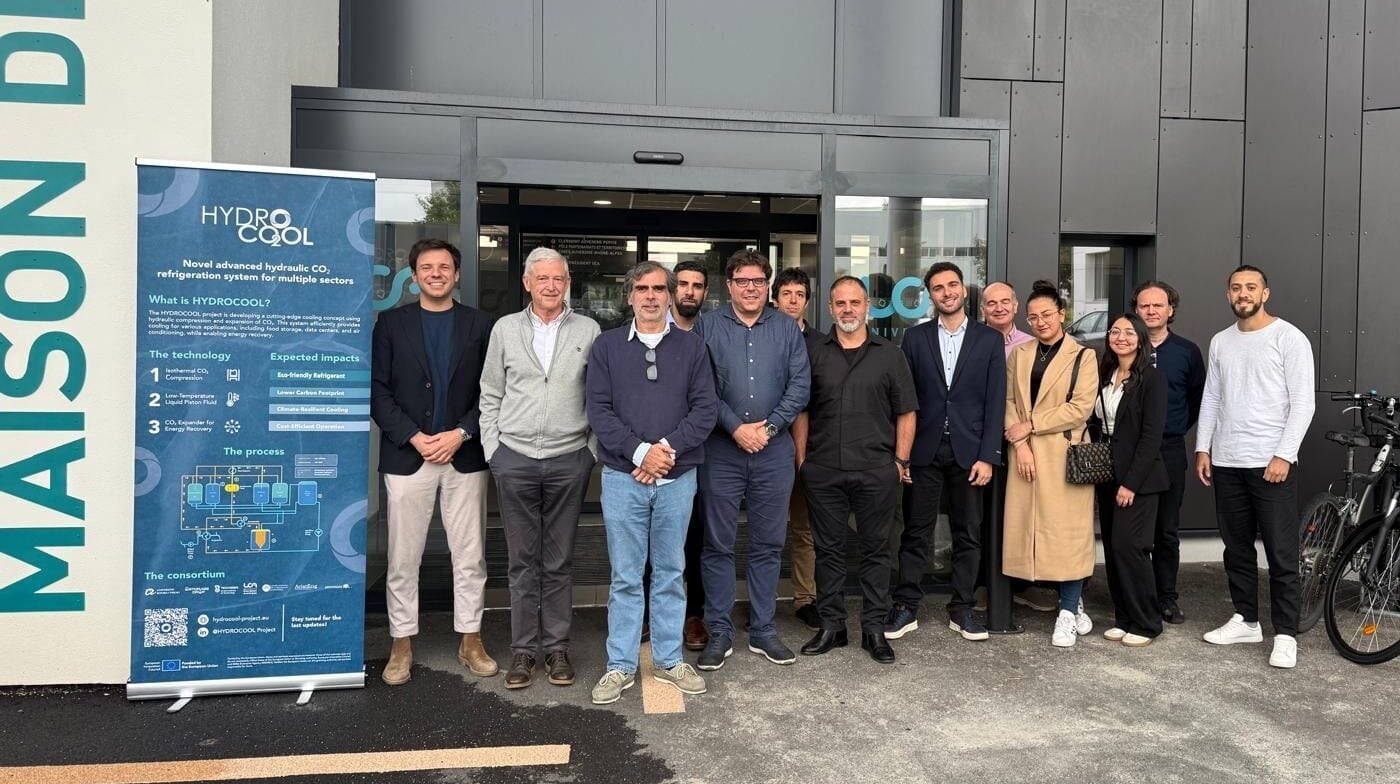

On the Thursday September 25th, the consortium of the HydroCool project, formed by representatives from Universitat Rovira i Virgili (URV), Storage Drop Ltd. (SD), Technion (TECH), Université Clermont Auvergne (UCA) with its associated partner CNRS AristEng (AE,), and Inveniam Group (INV), met at the Université Clermont Auvergne in the Maison de l’Innovation for the second General Assembly of the EU-funded HydroCool project.
The main goal of this meeting was to consolidate the foundations established during the project’s first year and prepare for the upcoming months, during which major advances will be made in the design, construction, and testing of the HydroCool prototype. These activities correspond to Work Packages 2 and 3, focused respectively on the system design and component integration led by Storage Drop, and on the construction, testing, and modelling of the 17.6 kW pilot system led by URV.
The meeting was opened by Vanessa Prévot – Vice-présidente chargée de la recherche from UCA, who welcomed all partners and underlined the importance of the project for advancing sustainable cooling. She emphasized that, at this stage, the consortium has successfully set up its governance, clarified roles, and aligned collaboration to ensure the achievement of objectives and expected impacts.
The technical session began with Daniel Ferrer (URV) presenting an overview of the HydroCool project and the progress achieved so far. WP1, led by Juan Carles Bruno (URV), has been successfully completed. Within this work package, Spyros Kyrimis (AristEng) presented key outcomes from the first circularity and sustainability assessment, highlighting:
He highlighted the integration of a recuperator into the system concept, achieving a 17% efficiency increase under subcritical operation and a 31% improvement under transcritical conditions. These advances contribute to a 53% reduction in the climate change impact of refrigeration systems and up to a 60% decrease in cooling costs at -20 to -30°C operating conditions.
Kyrimis concluded: “In subcritical we are better, but in transcritical we are great.” The analysis also confirmed that in terms of operation, CO₂ behaves similarly to air, validating early assumptions for the system design.
Johan Curirer (UCA) then presented advances in identifying suitable liquid piston fluids (LPFs) for the HydroCool system. The research team identified a promising commercial mixture, BIOPRIMARY 40, which performs similarly to a water and potassium acetate solution (H₂O + CH₃COOK), meeting the operational and environmental requirements of the project.
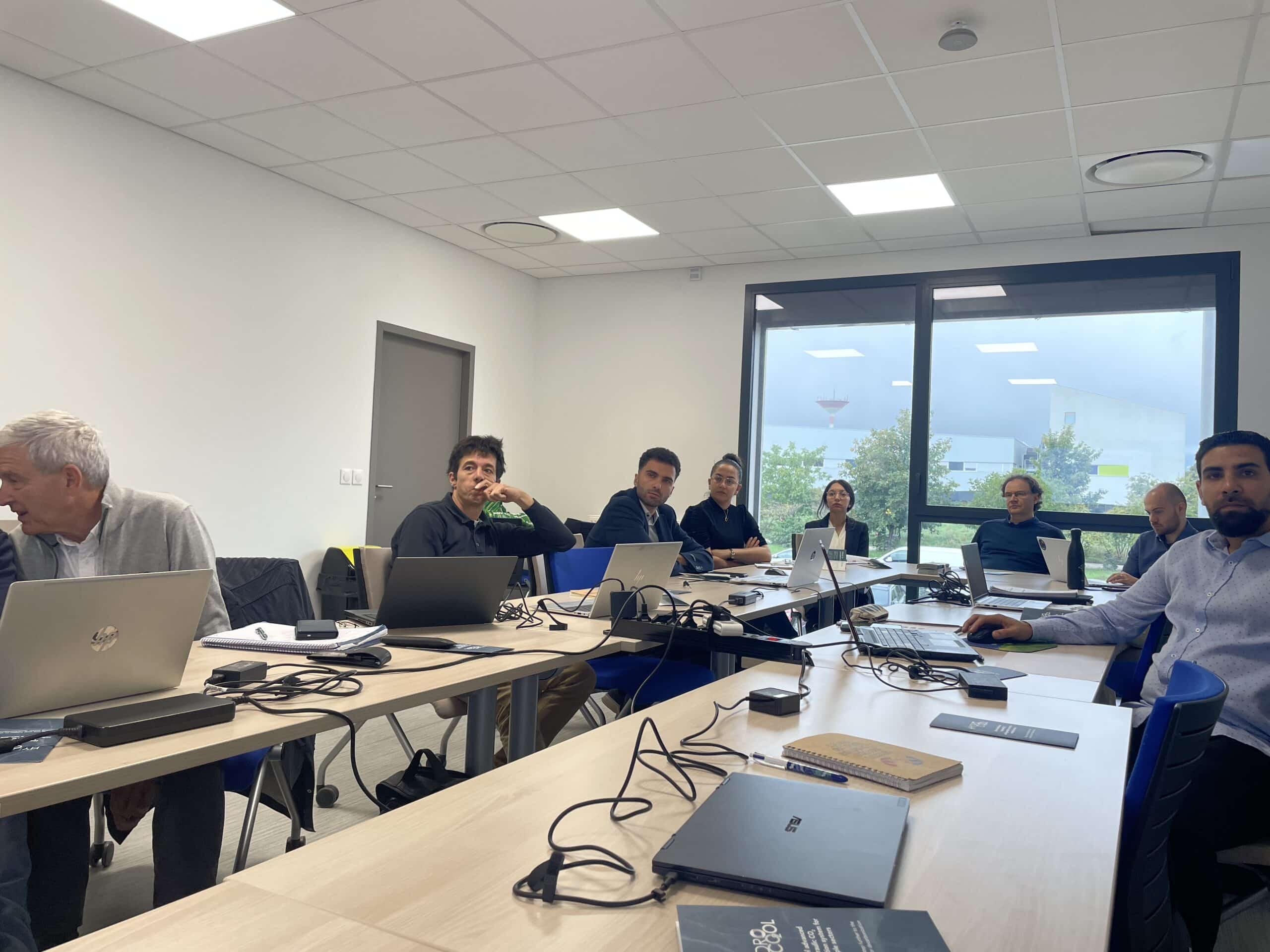
For WP2, Shay Cohen introduced SD’s commercial hydraulic air compression system, which serves as a technological reference for the CO₂ compression unit under development. He shared updated system diagrams and described the operational principles of the hydraulic compression and expansion cycle. WP2 has achieved approximately 50% completion, with the next steps focusing on finalizing the detailed engineering of the compressor, expander, and heat exchangers to enable the prototype assembly.
Regarding WP3, the consortium confirmed that equipment delivery is expected by Month 22, with testing and commissioning to begin at URV’s facilities immediately afterward. M. Reda Haddouch (URV) outlined the upcoming integration and testing plan for the 17.6 kW HydroCool pilot, emphasizing safety, validation of key performance indicators, and system optimization.
WP4, led by Guillem Figueras (Inveniam), presented advancements in communication and dissemination. After ten months, HydroCool’s digital outreach has achieved 9,794 impressions, a 21% engagement rate, and an average monthly follower growth of 35%, reaching 101 followers. The main audience includes business consultancies, higher education centers, and research organizations in Spain, France, and Greece. These metrics suggest a growing awareness and visibility within both academic and industrial communities, demonstrating the project’s resonance beyond the consortium.
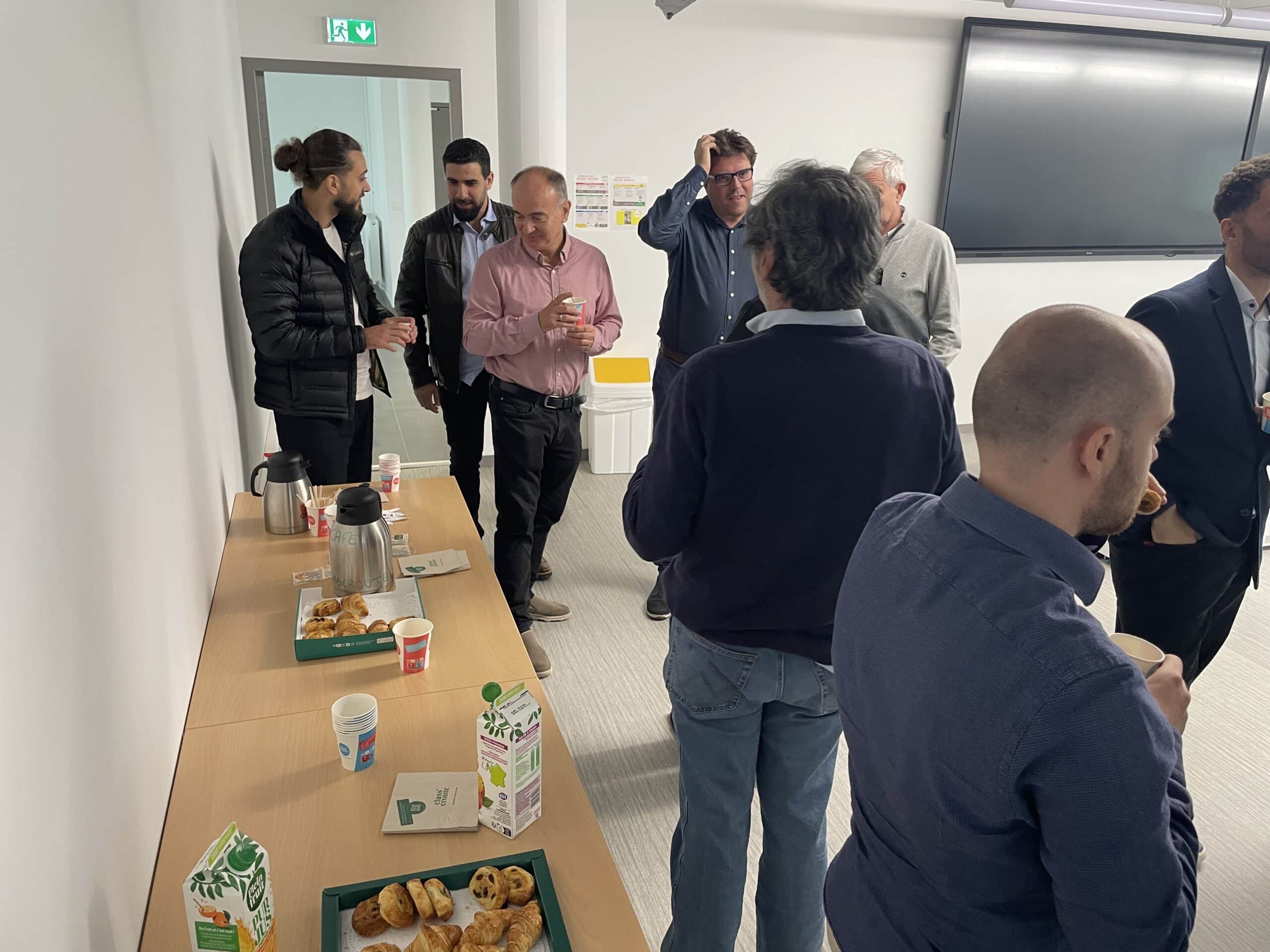
Following a networking lunch featuring local cuisine, the partners participated in financial and portfolio sessions. Silvia Pafovan and Oana Siuca (Inveniam) presented the project’s financial status, confirming steady progress and alignment with planned milestones. This was followed by a presentation from Guillem Figueras (Inveniam) on HydroCool’s contribution to the EIC Cooling Portfolio, highlighting synergies with other EU-funded projects on efficient cooling technologies.
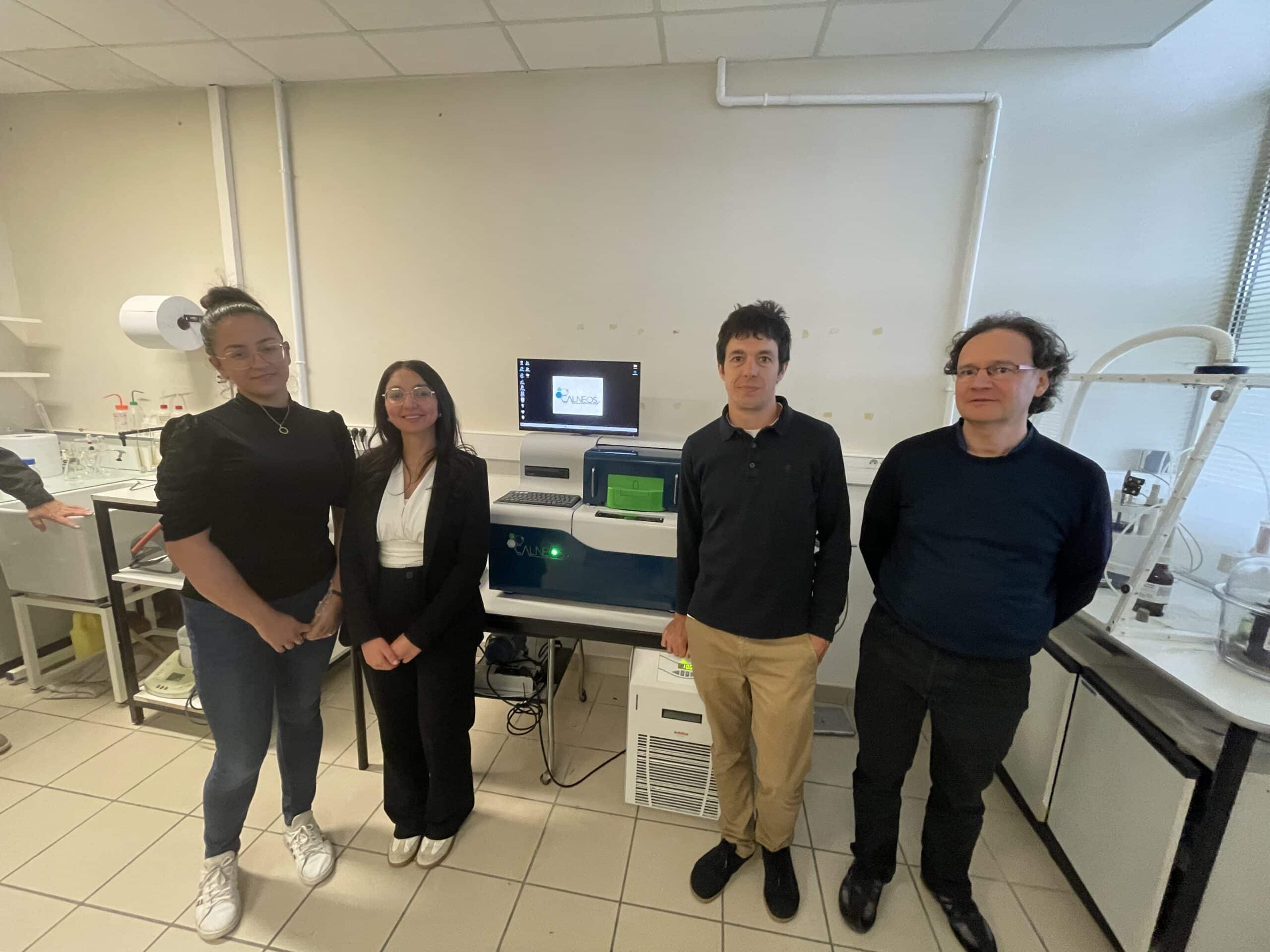
To close the day, the consortium visited UCA’s chemistry laboratories, where the research team showcased the ongoing experimental work on liquid piston fluid development and thermodynamic characterization, a key step for WP2 and WP3 integration.
The General Assembly reaffirmed HydroCool’s momentum as it transitions from theoretical validation to experimental demonstration. The next months will focus on prototype construction, testing, and environmental benchmarking, setting the stage for the project’s commercial and sustainability assessments.
The meeting concluded with a shared commitment to advancing clean, efficient, and circular cooling technologies for multiple industrial applications—from food refrigeration to data centers—contributing to the EU’s climate neutrality and innovation goals.
For further information, please contact:
info@hydrocool-project.eu