1. Introduction
Developing more sustainable cooling technologies is not just about replacing refrigerants or improving energy efficiency. Sometimes, it also means rethinking refrigeration systems from inside out.
To achieve this, HYDROCOOL is developing three technological breakthroughs that go beyond the current state of the art and aim to improve the performance of industrial and commercial refrigeration systems. Each one tackles a different challenge within the cooling cycle, with a common goal of making refrigeration systems more efficient and environmentally friendly.
One of these breakthroughs deals with a component that usually goes unnoticed but plays a crucial role in every refrigeration system: the compressor.
2. Why compression matters
Every refrigeration system depends on compression. Without it, the refrigerant wouldn’t be able to circulate through the system or transfer heat effectively. Yet despite being one of the most vital parts of the cooling cycle, the basic principle behind compression has changed surprisingly little over the years. Much of the industry’s attention has focused on developing new refrigerants and improving energy efficiency, while conventional compressors have continued to rely on the same mechanical approach.
Most systems still rely on solid parts such as pistons or screws that inevitably creates friction. Although this approach remains effective, the friction generated over time wastes energy as heat, produces noise and vibrations, and causes wear that increases the need for lubrication and regular maintenance to continue operating efficiently.
3. From solid pistons to liquid pistons
HYDROCOOL takes a different approach by challenging the established principle of mechanical compression and replacing one of its most familiar components: the solid piston.
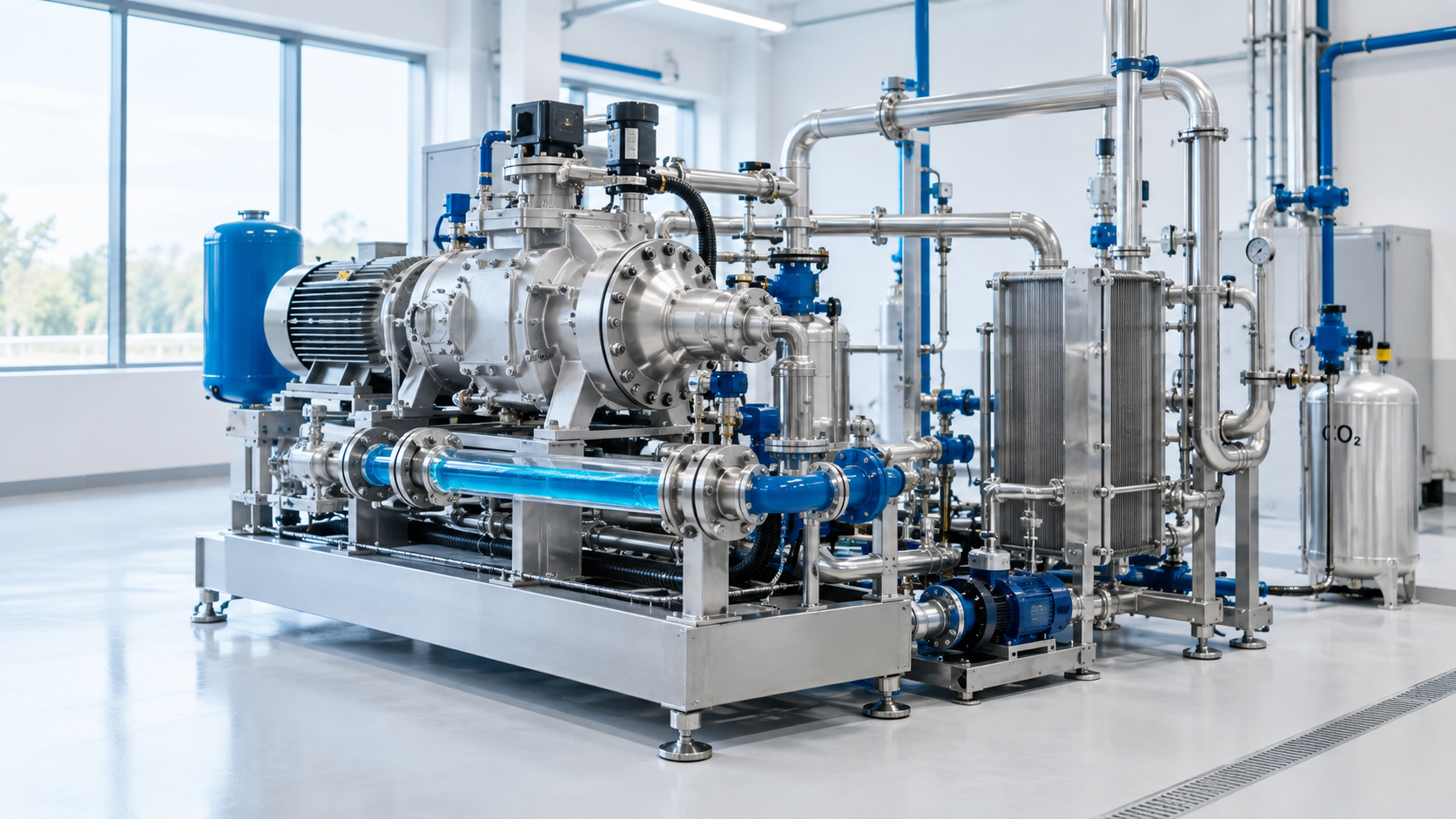
At the centre of the concept is a hydraulic compressor where pumped water acts like a “liquid piston.” As the water is pumped through the system, it compresses the CO2 refrigerant without depending on the same type of mechanical motion used in conventional compressors.
4. Why water?
The concept of hydraulic compression is not entirely new. HYDROCOOL partner Storage Drop has already demonstrated hydraulic compressors for compressed air operating at pressures of up to 80 bar, achieving energy savings of 20–30% compared with conventional air compressors.
HYDROCOOL now aims to build on this experience by adapting the concept to CO2 refrigeration.
While compressing CO2 presents different technical challenges than compressing air, it also opens the possibility of combining hydraulic compression with a natural refrigerant that has a much lower climate impact than many conventional alternatives.
5. What could this mean for refrigeration?
Developing a hydraulic compressor for CO2 is one of HYDROCOOL’s three technological breakthroughs.
If successfully demonstrated, the technology could reduce energy losses and maintenance needs while improving the efficiency of refrigeration systems used in cold storage, industrial processes, and data centres.
Authors: Loraine Castro & Lucía Salinas