1. Introduction
Developing cleaner cooling technologies is not only about selecting a refrigerant with a lower climate impact. It also requires ensuring that every part of the system can operate efficiently under the demanding conditions found in refrigeration applications.
To address this challenge, HYDROCOOL is developing three technological breakthroughs that aim to improve the performance and environmental sustainability of industrial and commercial refrigeration systems.
The second breakthrough focuses on a component that may appear simple but could determine how widely the technology can be applied: the fluid used inside the hydraulic compressor.
2. When water reaches its limit
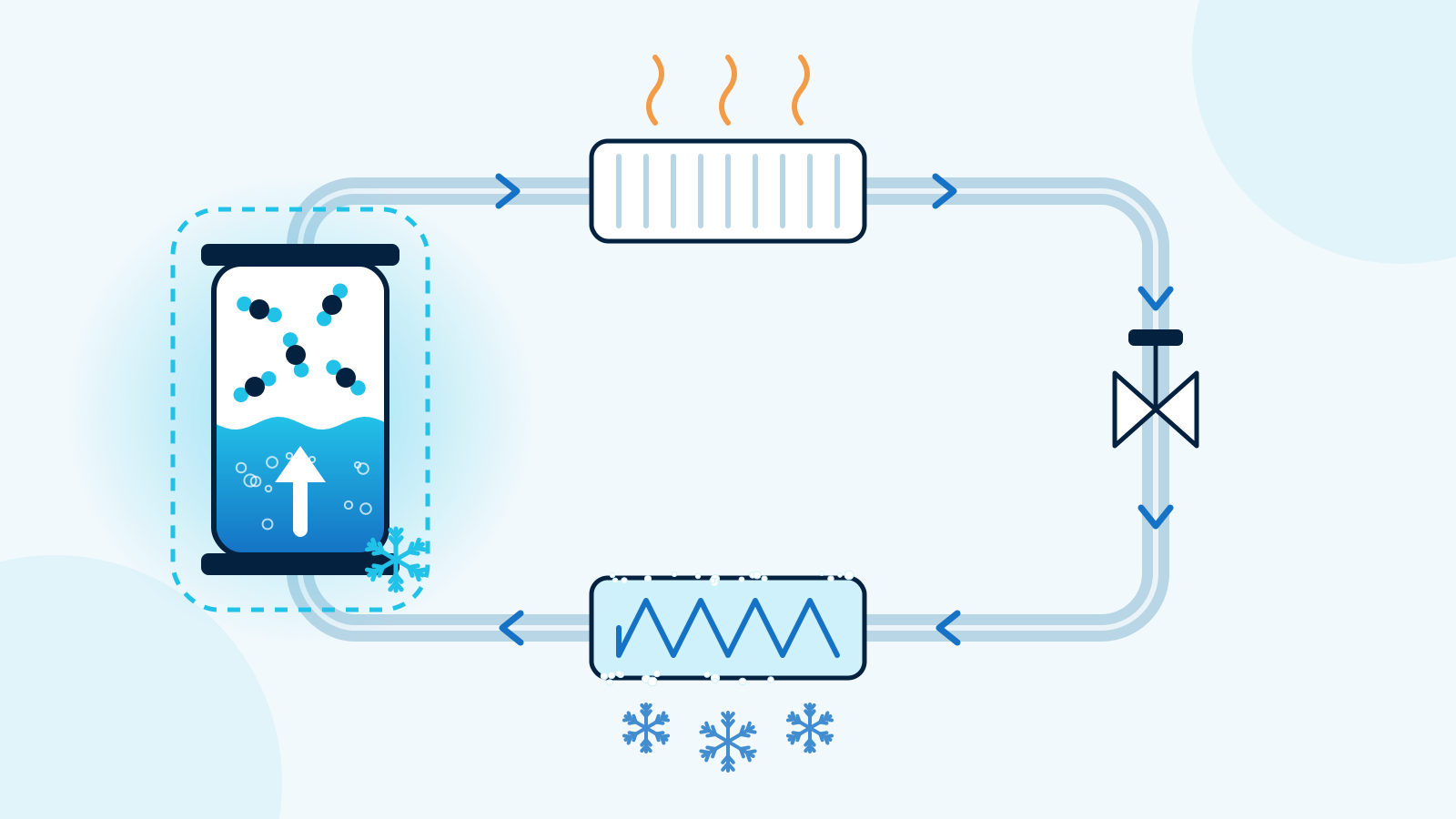
At the center of the HYDROCOOL concept is a hydraulic compressor in which a new pumping technology is applied; instead of standard mechanical-based ones, a fluid is used as a “liquid piston” to compress CO2.
Water is an attractive starting point for this role. It is widely available, affordable, and has a high heat capacity, which allows it to absorb part of the heat generated during compression. Its low compressibility also makes it suitable for efficiently transmitting hydraulic pressure.
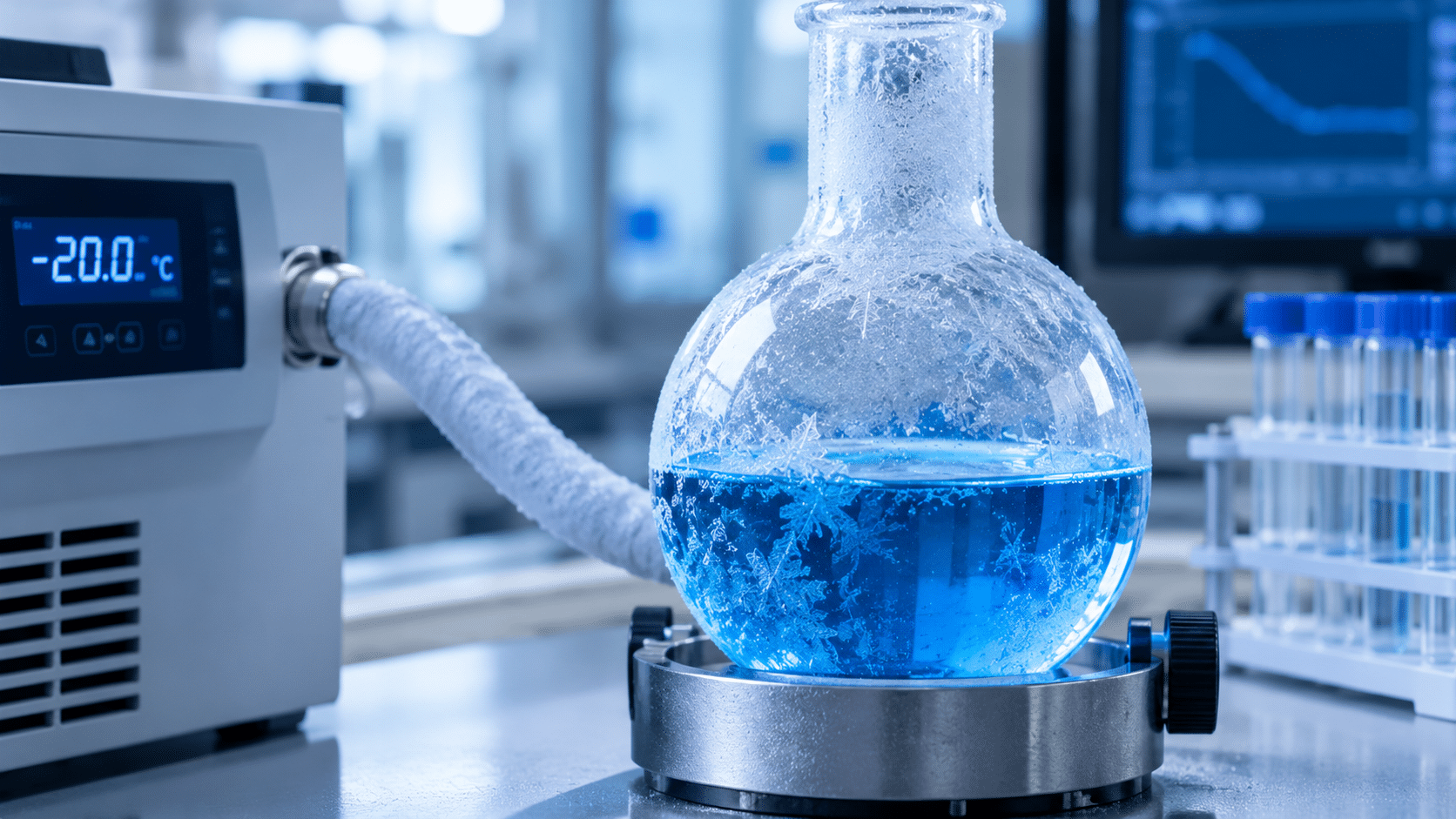
However, many refrigeration applications, such as food preservation, industrial cooling, and deep-freeze storage, require temperatures far below 0 °C. While water is an excellent candidate for hydraulic compression, it faces important limitations under these conditions. As temperatures decrease, the risk of freezing increases, making water unsuitable for applications that demand reliable operation at sub-zero temperatures.
An additional challenge arises from the interaction between water and CO₂ under pressure. Rather than simply freezing at 0 °C, water molecules can surround CO₂ molecules and form cage-like crystalline structures known as gas hydrates. These ice-like solids can remain stable at temperatures significantly higher than the normal freezing point of water. Under operating conditions relevant to HYDROCOOL, hydrate formation may occur at temperatures of around 9 °C, meaning that water can become problematic long before reaching the low temperatures typically required in refrigeration systems.
3. More than antifreeze challenge
As mentioned above, lowering the freezing point of the liquid piston fluid is a significant challenge to ensure reliable operation under low-temperature conditions. However, this is not the only challenge that the fluid must overcome. Other key requirements include:
- CO₂ absorption (solubility): The fluid should minimise the amount of CO₂ dissolved in the liquid to avoid performance losses and operational issues.
- Heat capacity and thermal conductivity: The fluid should be able to effectively absorb and transfer heat generated during the compression process.
- Chemical stability and corrosiveness: The fluid must remain stable under operating conditions and should not cause excessive corrosion of system components.
This means that the objective is not simply to find a liquid that remains fluid below 0 °C. A suitable liquid piston fluid must simultaneously support heat transfer, hydraulic compression, and stable interaction with CO₂.
4. Finding the right balance
Several families of fluids were evaluated as potential liquid piston candidates, each offering advantages in relation to some of the key challenges, while presenting limitations in others.
Salt-based aqueous solutions can help address the first challenge by reducing the freezing point of water and extending its operating range to lower temperatures. Some salts can also reduce CO₂ solubility, helping to mitigate gas absorption issues. However, their use may introduce challenges related to corrosion and long-term material compatibility, which must be carefully considered.
Ionic liquids offer a different approach. Their molecular structure can be tailored to achieve specific properties, making them attractive candidates for addressing challenges such as low-temperature operation, CO₂ interaction, and chemical stability. However, their relatively high cost and the environmental impacts associated with their production may limit their suitability for large-scale industrial applications.
Deep eutectic solvents (DESs) have also attracted attention because they may combine low melting temperatures with potentially lower costs and environmental impacts than some ionic liquids. At the same time, their thermophysical properties and behaviour in hydraulic CO₂ compression applications remain less explored, requiring careful assessment before industrial implementation.
The evaluation of these fluid families highlights the complexity of the challenge. A fluid that performs well in one area may perform less favourably in another. There is therefore no ready-made solution. Selecting a suitable liquid piston fluid requires balancing all these requirements simultaneously and identifying the best compromise between low-temperature operation, CO₂ compatibility, heat-transfer performance, chemical stability, sustainability and industrial applicability.
5. How HYDROCOOL addressed the challenge
To identify suitable liquid piston fluids, HYDROCOOL followed a structured evaluation process that combined technical, environmental and economic criteria.
The project first defined the key performance requirements for candidate fluids, including low-temperature operation, CO₂ compatibility, thermal performance and material stability. These requirements formed the basis for the screening methodology described in Requirements and Characterization of the HYDROCOOL System (D1.2).
Using this framework, HYDROCOOL assessed a broad range of candidate fluids and selected the most promising options for further evaluation, as reported in Selection of 10 Promising Liquid Piston Fluids (LPFs) (D1.3).
The shortlisted candidates were then characterised in greater detail, including their interaction with CO₂ and their suitability for hydraulic compression applications, while sustainability and circularity considerations were also incorporated into the assessment process. These activities are documented in CO₂ and Water/Alternative Fluid Interaction Assessment (D1.4), Circularity Requirements, Material Pre-selection and Preliminary Costs Assessment (D1.5), and Selection, Characterization, and Production of the LPF (D2.1).
This work has provided the knowledge needed to support the ongoing development and design of the HYDROCOOL system, as described in Final Design and System Simulation (D2.2).
6. Why this matters for low-temperature cooling
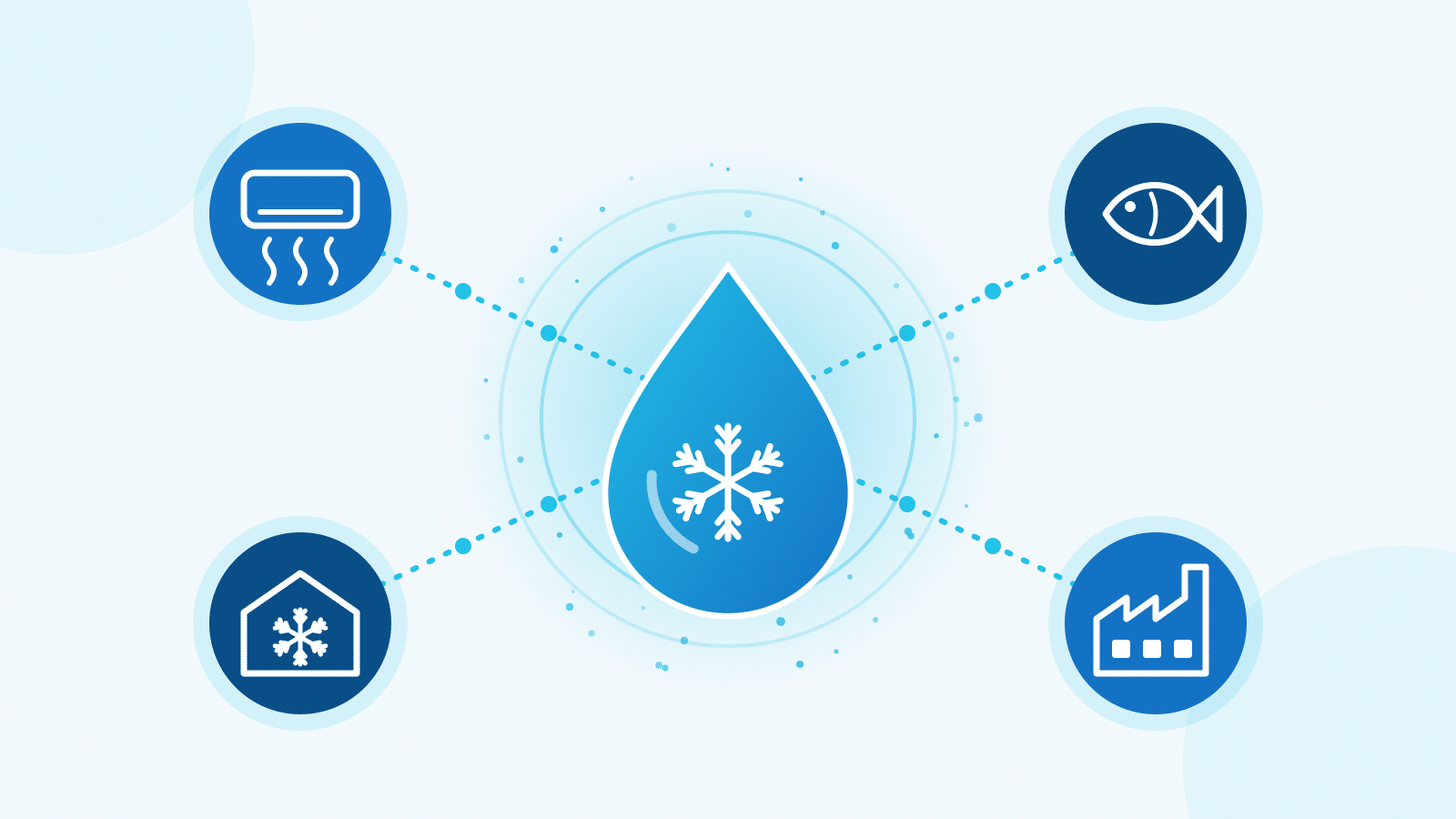
Many refrigeration applications, such as food processing, cold storage, and industrial cooling, require technologies capable of operating efficiently under demanding conditions. Expanding the range of liquid piston fluids available for hydraulic CO₂ compression is therefore an important step towards broadening the potential application of this technology.
By improving our understanding of how different fluids behave under refrigeration-relevant conditions, HYDROCOOL is helping establish the foundations for future hydraulic compression systems that combine the benefits of CO₂ as a natural refrigerant with innovative compressor technologies.
Sometimes, the step that enables technology to reach new applications is not a larger machine or a more complex component. It is finding the right material to make the entire system work.
Author: Pol Galan
Editor: Josep Mercadal & Guillem Figueras